
Supreme Court judge Justice B V Nagarathna stated that judicial independence in the modern era includes freedom from algorithmic influence, emphasising that AI should only assist judges, who must ultimately decide based on constitutional values and human judgment.

'FPIs are unlikely to return unless there is equilibrium between valuation premium and earnings growth.'

'Markets never fully lose hope. But an important shift could come if the Strait remains closed -- moving from high prices to no prices.'

Indian stock markets tumbled sharply with the Sensex falling 800 points and nearly 4 lakh crore wiped out in a single session. Here are the 6 key factors, including rupee weakness and global cues, behind the crash.
Benchmark indices Sensex and Nifty tumbled in early trade on Friday after a two-day rally, tracking a weak trend in global peers, as the US-Iran conflict continues to be a key overhang for the markets. Track Sensex, Nifty50 movement and key market drivers for March 27, 2026.

Indian benchmark indices, Sensex and Nifty, rallied significantly following a sharp decline in crude oil prices. This decline was triggered by US President Donald Trump's announcement of progress in negotiations with Iran towards a peace agreement, which led to renewed optimism in global markets.

Indian benchmark indices Sensex and Nifty rallied nearly 1 per cent, driven by optimism over easing geopolitical tensions in the Middle East and fresh foreign fund inflows, with the Sensex gaining over 500 points.
Indian benchmark indices Sensex and Nifty rebounded sharply on Monday, driven by a correction in crude oil prices due to ceasefire efforts in West Asia and strong buying in bank stocks.

Analysts are increasingly optimistic about India's capital markets, with HDFC AMC, CAMS, and KFin Technologies identified as top investment picks. This optimism stems from a structural shift in household savings towards financial instruments and an expected multi-year earnings expansion for market infrastructure providers and asset management companies.
Supreme Court judge Justice B V Nagarathna stated that judicial independence in the modern era is not just freedom from external power, but also from algorithmic influence, while speaking at a conference in Bengaluru.

Wipro reported Q4FY26 IT services revenue of $2.6 billion, a modest 0.2 per cent Q-o-Q constant currency growth, with adjusted operating profit margin beating estimates at 17.2 per cent. The company announced a significant share buyback of ~15,000 crore, but faces near-term growth challenges, particularly in the BFSI segment, and has issued a soft Q1FY27 revenue guidance.

The Indian rupee rebounded against the US dollar after the Reserve Bank of India (RBI) restricted banks' net open positions in dollars. This move prompted banks to sell dollars, providing temporary support for the rupee amidst ongoing geopolitical tensions and rising oil prices.

Billionaire Mukesh Ambani's Reliance Industries Ltd may spend about $12-15 billion over the next few years on AI infrastructure that could include a giant 1GW data centre, Morgan Stanley said in a report. Ambani had at the company's annual shareholder meeting in August announced a major push into AI through a new subsidiary and strategic partnerships.

Indian equities on Dalal Street declined in early trade on Monday as crude oil prices climbed amid fears of further escalation in the West Asia the war. Track Sensex, Nifty50 movement and key market drivers for Apr 6, 2026.
Supreme Court judge Justice B V Nagarathna has cautioned against the over-reliance on Artificial Intelligence (AI) in the judiciary, emphasising the need for judicial independence from algorithmic influence. She stressed that AI should only serve as a tool and not replace human judgement, which is guided by legal reasoning, constitutional values, and a deep sense of justice.

Indian equity markets experienced a volatile session, with the Sensex and Nifty recovering some ground after a significant plunge the previous day. Gains were driven by PSU bank, IT, and metal stocks, but concerns over rising fuel prices and geopolitical tensions limited the recovery.

Despite recent share price dips, Bharti Airtel is strategically positioned for growth, driven by investments in data centres via Nxtra, a potential tariff hike, and strong performance in Africa, alongside efforts to deleverage and expand its subscriber base in underpenetrated rural markets.

Indian equities on Dalal Street saw volatility. Track Sensex, Nifty50 movement and key market drivers for Feb 25, 2026.
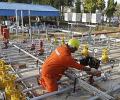
State-run oil-marketing companies (OMCs) are unlikely to significantly raise petrol and diesel prices despite crude oil nearing $100 a barrel, leading to potential margin pressure, while CLSA analysts project a 65 per cent upside for ONGC's stock.

Indian stock market benchmark indices Sensex and Nifty experienced a significant decline, driven by escalating tensions in the Middle East and rising crude oil prices.

'Equities may not outperform every year, but if they do so seven times out of 10, it's an asset class worth relying on.'

The Indian rupee crashed to a record closing low against the US dollar due to rising global crude oil prices, a strengthening dollar, and geopolitical tensions in the Middle East.
Indian equity markets experienced a significant downturn, with the Sensex and Nifty plummeting due to rising crude oil prices, geopolitical tensions in West Asia, and continuous foreign fund outflows.
Indian stock markets recovered from early losses to close higher, driven by value buying in IT and banking shares and a rebound in the rupee.

Indian benchmark equity indices experienced a significant downturn, with the Sensex plummeting over 800 points and the Nifty falling sharply, driven by rising crude oil prices, geopolitical tensions, and foreign capital outflows.

The business value of the league, popularly called the IPL, surged to a record $18.5 billion last year, U.S.-based investment bank Houlihan Lokey says.

The Indian IPO market is experiencing a significant surge in preliminary filings, with 38 companies submitting papers to SEBI in March 2026, driven by a combination of improved issuer confidence, strategic regulatory compliance, and private equity investors seeking exits amidst volatile market conditions.
Indian stock market benchmarks Sensex and Nifty rebounded strongly after a two-day decline, driven by falling crude oil prices and positive global cues amid hopes of de-escalation in the Middle East.
Equity benchmark indices Sensex and Nifty rebounded sharply by nearly 1 per cent on Monday, driven by strong buying in power, banking, and financial stocks.
The Iran conflict led to a sharp correction in Reliance Industries Ltd's (RIL's) share price, which has been partially reversed by a rebound.

Indian equities on Dalal Street saw volatility as global market trends and fresh tariff concerns linked to Donald Trump impacted investor sentiment. Track Sensex, Nifty50 movement and key market drivers for Feb 24, 2026.
Benchmark Sensex tumbled 1,236 points or 1.5 per cent while Nifty closed near 25,450 on Thursday following an across-the-board sell-off amid escalating geopolitical tensions between the US and Iran.

Benchmark equity indices Sensex and Nifty extended their gains for the third straight session on Wednesday, driven by last-hour buying in bank, metal, and FMCG shares.

Benchmark equity indices Sensex and Nifty tumbled more than 1 per cent on Friday due to across-the-board selloff, especially in metal, IT and commodity stocks, tracking sluggish global markets.

Benchmark indices Sensex and Nifty ended lower on Thursday, snapping a three-day rally, amid a weak trend in global stock markets.
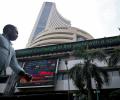
Benchmark stock indices Sensex and Nifty closed on a flat note in a choppy session on Wednesday as gains in PSU banks and auto shares were offset by losses in IT stocks.
From the 30-Sensex firms, HDFC Bank, Infosys, HCL Tech, Bajaj Finance, Tata Consultancy Services and Reliance Industries were among the biggest laggards. In contrast, Bharat Electronics, Hindustan Unilever, Tata Steel and UltraTech Cement were among the gainers.

The BSE Sensex plummeted 1,236 points, wiping out nearly Rs 7 lakh crore in investor wealth, driven by escalating tensions between the US and Iran and subsequent market selloff.
Equity benchmark indices Sensex and Nifty experienced a significant decline, primarily driven by a selloff in IT stocks due to concerns about AI disruption and renewed worries over global trade.
Stock market benchmarks ended with losses for the third straight session on Wednesday as heightened geopolitical tensions, weak global peers and persistent foreign fund outflows unnerved investors.
